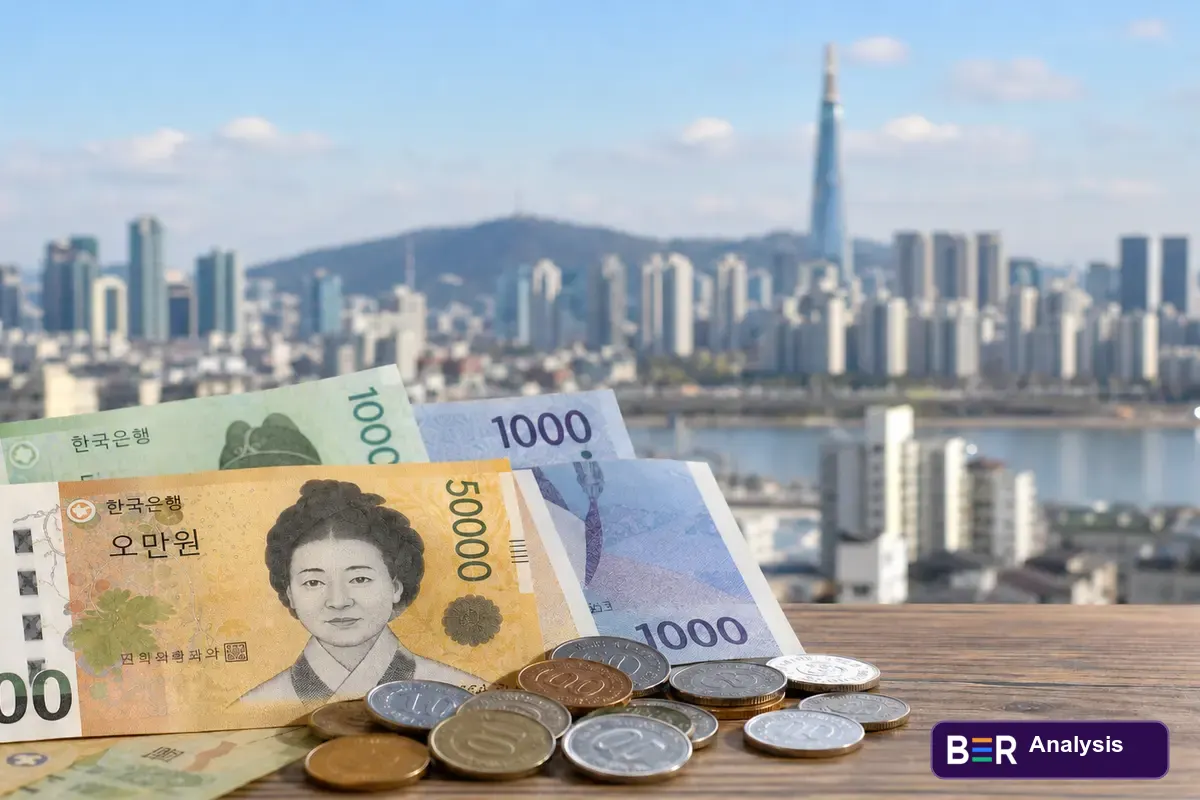
KRW Market Update
21 Jul 2026 • 00:32 GMT
The Korean won (KRW) has hit a 60-day high against the US dollar, trading near 0.000678. This is about 2.1% above its three-month average and reflects recent stability in the currency, which has traded within an 8% range since late winter. The strengthening KRW comes amid expectations of continued trade surpluses and steady capital inflows, supported by optimism around South Korea’s economic performance and stability.
Looking ahead, many analysts forecast the won may strengthen further against the USD by year’s end, with some major banks predicting the USDKRW rate could fall below 1,400. However, developments such as U.S. interest rate policies and global economic conditions will influence future moves. If U.S. rates stay high or rise further, the dollar could retain strength. Conversely, positive trade data and government efforts to attract investment might support ongoing KRW gains.
For retail FX traders, the recent KRW rally against the dollar still shows signs of stability, but watch for U.S. economic data and global geopolitics, which could bring short-term fluctuations. Overall, expect the KRW to stay relatively strong but remain sensitive to broader global events.
📊 Quick forecast view
🟢 Mild upside
0.0010 – 0.0010
🌍 Global risk sentiment
🟢 Uptrend