Currency in Greenland: DKK Send & Spend FX Guide
 Resources for Expats, Travelers and Entrepreneurs Navigating Life and Trade in Greenland with the Danish krone.

What's in this Greenland currency guide?
What currency is used in Greenland?
The official currency of Greenland (country code: GL) is the Danish krone, with symbol kr and currency code DKK.
What is a good Danish krone exchange rate?
The BestExchangeRates.com currency comparison table below helps you see the total cost of your currency transaction by showing the exchange rates offered by different providers. It also makes it easy to spot potential savings from market-leading FX services compared to bank rates.
To see a full list of rates, enter your transaction type, currencies and amount then click ‘GET RATES’:
Loading rates...
|
|
|
Good things to know about the Danish krone
Recent headlines about the US's interest in Greenland, including potential military action, have not significantly impacted markets. This reflects the market's hesitation to price in Trump's geopolitical moves.
However, US-Denmark tensions have highlighted the Danish krone as a potential indicator of Greenland-related risks. January has seen unusual EUR/DKK forward movements and slight upward pressure on spot rates. These shifts may involve central bank intervention and speculation about Greenland but are not alarming yet.
Denmark's Stakes
Greenland, an autonomous Danish territory, contributes little to Denmark's GDP (0.8% if included, mainly from fisheries). Denmark provides Greenland with an annual grant of DKK 3.9bn (US$511m), which is 20% of Greenland’s GDP and over half its government revenue.
Economic risks for Denmark from US claims on Greenland are indirect. Excluding the unlikely scenario of military conflict, economic retaliation is the main concern. The US, Denmark's largest export market (18% of exports, mainly pharmaceuticals), has already targeted Danish products with protectionist policies.
Denmark maintains a fixed exchange rate policy ("peg") to stabilize the Danish krone against the euro at around 7.46 DKK per euro. The Danish National Bank enforces this policy to ensure economic and financial stability.
For more DKK information check out our selection of Danish krone news and guides.
Frequently Asked Questions
What currency should I use in Greenland?
The domestic currency in Greenland is the Danish krone.
What is the Danish krone currency code and symbol?
The three letter currency code for the Danish krone is DKK — symbol is kr.
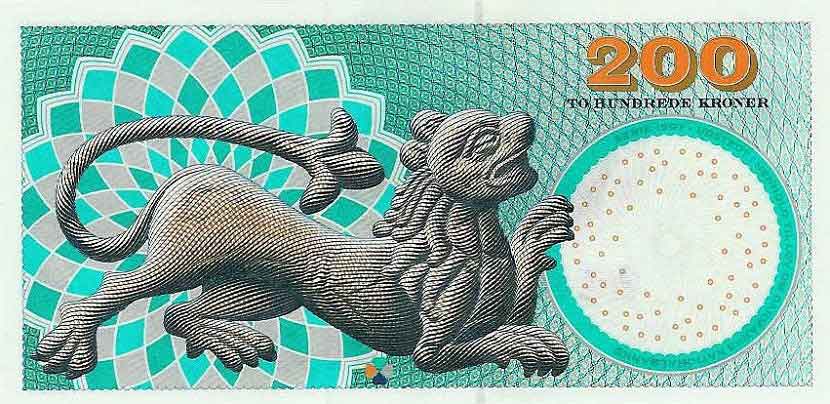
What does the Danish krone look like?
Here is an example Danish krone banknote:
Which countries use the Danish krone?
It is the domestic currency in Denmark, Faroe Islands and Greenland.
Is the Danish krone a closed currency?
No, the Danish krone is freely available and convertible. See guide: What is a closed currency?
What are equivalent amounts of USD and DKK?
Here are some popular conversion amounts for USD to DKK (US dollar to Danish krone)*.
*Converted at the current USDDKK interbank exchange rate. Calculate actual payout amounts for Send Money and Travel Money exchange rates.
Travel money for Greenland
Using Wise for Danish krone travel money is a smart choice for savvy travelers. With its competitive exchange rates and low fees, Wise allows you to convert and manage multiple currencies effortlessly.
Be careful when using your own bank's Debit/Credit Card, as your bank may also charge an extra 3% as an “Overseas Transaction Charge” plus “Overseas ATM” fees for withdrawing cash on top of the standard Visa/Mastercard 2.5% from market mid-rate.
For card purchases, if you are offered a choice of currencies always select to Pay in Danish krone otherwise you will typically get much worst dynamic currency conversion (DCC) exchange rates.
If you really want Danish krone cash before departure, you can save money by ordering online. You generally get better rates and can pick up the DKK cash locally or even on travel day at the airport.
Greenland: Travel Guide
Traveling to Greenland requires careful financial planning to ensure a smooth and cost-effective experience. Here's a comprehensive guide to help you navigate currency considerations and manage your money effectively during your visit.
Greenland is an autonomous territory of Denmark located between the Arctic and Atlantic Oceans, north of Canada. It is known for its rugged, remote wilderness, and diverse landscapes, including glaciers, fjords, and mountains.
Tourism in Greenland is focused on adventure and nature activities such as dog-sledding, ice-climbing, hiking, and fishing. Visitors can also experience traditional Inuit culture by visiting small coastal towns and villages, where they can learn about the local way of life, history, and customs.
Greenland also offers unique opportunities for viewing the Northern Lights and Midnight Sun, as well as for observing wildlife, including whales, seals, and polar bears.
The country also has a rich culture, with a blend of Inuit, Norse and Danish influences. Visitors can experience the local music, dance, and art, and can also learn about the country's history and traditional way of life.
Traveling to Greenland can be challenging, as infrastructure is limited and weather conditions can be harsh. The best way to get around is by plane, boat or snowmobile.
It's worth noting that Greenland is a remote and sparsely populated country, and visitors should be prepared for the harsh conditions and limited infrastructure.
It's also important to be aware that the cost of living in Greenland is high, and that the official language is Danish, although many people in Greenland also speak Greenlandic, English and some other languages.
Overall, Greenland is a unique destination that offers visitors the opportunity to experience a truly wild and unspoiled wilderness, and to learn about the country's rich culture and history.
Everyday Costs in in Greenland
How much does it really cost to live, work, or travel in Greenland? Here's what to expect for daily expenses and expat living.
Currency Guide: Greenland (ISO Code: GL)
For travelers planning a visit to Greenland, it’s crucial to budget appropriately for a one-week mid-range stay. Expect to spend between 12,000 and 18,000 Danish Krone (DKK) for a comfortable yet moderate experience, which includes accommodations, meals, and activities. Here’s a breakdown of typical daily expenses in Greenland to help you gauge your budget:
- 🍽️ Meal at a local restaurant: 200 – 400 DKK
- ☕ Coffee: 30 – 50 DKK
- 🚍 Public transport fare: 25 – 50 DKK
- 📱 Prepaid SIM card: 300 – 500 DKK
- 🏨 Budget hotel or Airbnb: 700 – 1,200 DKK
Traveling in Greenland can be considered relatively expensive compared to many other destinations. When compared to the United States, the cost of living is notably higher, especially for dining and lodging. Similarly, traveling in Greenland tends to be pricier than in the UK, but may still provide slightly more value compared to Australia, where tourists typically encounter similar or higher prices in major cities.
Living Costs for Expats in Greenland
For expatriates residing in Greenland, the typical monthly living costs can average around 25,000 to 35,000 DKK, which includes housing, utilities, groceries, and leisure activities. When it comes to managing finances, local banking services are widely available, but expats often find that credit and debit cards are accepted in most establishments, making daily transactions convenient. However, it’s wise to carry local currency for smaller vendors and rural areas.
For optimal money management, using online transfer services like Wise or OFX can often prove to be more advantageous than exchanging money locally, which can carry higher fees and less favorable rates. These services provide competitive exchange rates and lower transaction fees, making them a cost-effective solution for sending and receiving money while living or working abroad in Greenland.
USD/DKK Market Data
The below interactive chart displays the USD/DKK change and UP📈 DOWN📉 trends over the past 1 Year.
Recent Danish krone Market News
Danish Krone (DKK) Market Outlook
Recent developments indicate that the Danish krone has been influenced by international geopolitical and strategic considerations, notably the increased market attention towards Greenland. ING notes that the krone has experienced upward pressure in forward markets amid speculation about US interests in Greenland, with the Danish central bank maintaining substantial FX reserves, providing it with resilience against currency fluctuations without immediate rate hikes. These factors suggest a cautious stance from the Danish authorities, with potential for stabilization or mild appreciation depending on geopolitical developments.
Key watchpoints:
- Market sentiment influenced by US interests in Greenland may impact DKK volatility.
- Central bank reserves and intervention policies remain pivotal for stability.
- No significant shifts anticipated unless geopolitical tensions escalate or broader EUR-DKK dynamics change markedly.
For more DKK information read our News and guides to the Danish krone.
Send Money to Greenland - Best Rates
To get a good (and fair) exchange rate when sending money to Greenland you need to find and compare exchange rates for International Money Transfers (IMTs).
The available FX rates for sending money abroad can be very different to the mid-market (wholesale) rate which you see reported online and in the News.
You should especially compare your own bank's exchange rates to those available from Money Transfer specialists to see how much you can save - we make that calculation easy in the below table.
Get a better deal for foreign transfers to Greenland
When sending money to Greenland it’s important to compare your bank’s rates & fees with those we have negotiated with our partner money transfer providers. To get a better deal you should follow these 4 simple steps :
- Open an account with a BER reviewed FX provider (id docs may be required)
- You specify the local or Danish krone amount you want to transfer
- Make a local currency domestic transfer for the requested amount to the provider's bank account in your country
- Once your funds are received by the provider the converted DKK amount will be transfered to the recipient account you specify in Greenland.
Use the above calculator to compare the exchange rates of FX specialist providers rates versus your bank's standard rates you can hopefully save around 5% and maybe more - end result is more Danish krone deposited into the recipient bank account and less margins and fees kept by the banks!
Managing money while living and working in Greenland
Managing your money effectively while living and working abroad can be challenging, but there are several steps you can take to ensure that your finances are in order.
Understand Danish krone currency exchange rates: Exchange rates can have a big impact on your finances, so it is important to keep an eye on the DKK exchange rate and consider using a money transfer specialist or a credit card that does not charge foreign transaction fees to get the best exchange rate.
Use a local Danish krone bank account: A local DKK bank account can make it easier for you to manage your finances and pay bills while you are in Greenland. It may also be more convenient to use a local DKK bank account to make purchases and withdraw cash.
Research local laws and regulations: It is important to understand the local laws and regulations that apply to financial transactions in Greenland. This can help you avoid legal issues and ensure that you are complying with local requirements.
Consider the tax implications: It is important to understand the tax implications of living or doing business in Greenland. This can help you plan your finances and ensure that you are paying the correct amount of tax.
Seek financial advice: If you are unsure of how to manage your finances in Greenland, it is a good idea to seek the advice of a financial professional who is familiar with the local financial system. This can help you make informed decisions and avoid financial pitfalls.
We have put together some key points to help managing your money effectively, you can reduce financial stress and enjoy your experience living or doing business in Greenland.
How is the Greenland economy?
Greenland's economy is relatively small and heavily dependent on exports of fish and fish products, which make up the majority of the country's exports. Additionally, the country's economy also relies on income from tourism, mineral extraction, and subsidies from Denmark. The country's economy has been growing in recent years, but it still faces many challenges.
One of the main challenges facing Greenland's economy is its dependence on exports, which makes it vulnerable to fluctuations in international markets. Additionally, the country has a small domestic market, which limits the potential for growth in certain sectors.
Greenland also has a high cost of living, which can be a barrier to economic development and make it difficult for businesses to compete with foreign imports.
The country's remote location also makes it expensive to transport goods and people, which can make it difficult for businesses to operate and for people to access goods and services.
The Government of Greenland has been working to diversify the economy by developing new sectors such as tourism, mineral extraction, and renewable energy. It's also trying to improve infrastructure and increase access to education and training to promote economic development and improve the standard of living for the population.
In conclusion, Greenland's economy is small and heavily dependent on exports and subsidies, it faces challenges such as a small domestic market, high cost of living, and a remote location, however, the government is working to diversify the economy and improve infrastructure and access to education and training to promote economic development.