Where to for the Loonie in 2026
The Canadian dollar could recover modestly over the next year, but trade uncertainty and the interest-rate gap remain important risks.
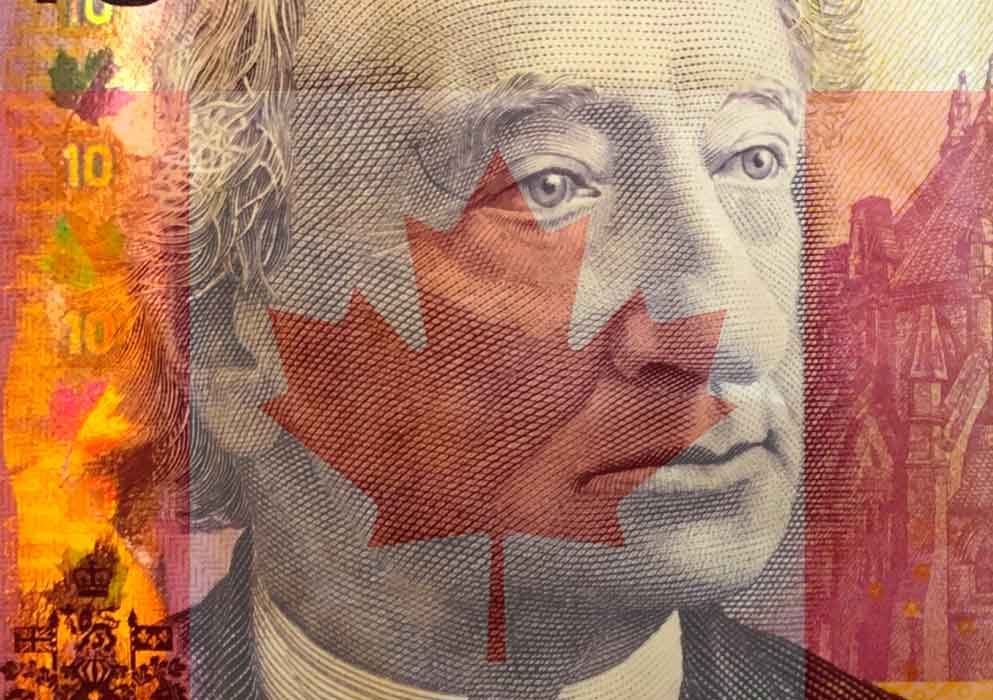
The Canadian dollar, often called the “loonie,” has had a difficult first half of 2026. By mid-July it was trading near US$0.71, or about C$1.41 for one US dollar. The currency has been caught between a stronger US dollar, a softer Canadian economy, changing oil prices and uncertainty over Canada’s trading relationship with the United States.
The outlook for the rest of 2026 is mixed. A modest recovery is possible, but the loonie is likely to remain sensitive to interest-rate expectations, trade negotiations and global risk sentiment.
Interest rates remain a headwind
The Bank of Canada held its overnight rate at 2.25% on 15 July and has kept it at that level since October 2025. US interest rates remain higher, making US-dollar assets relatively attractive and limiting demand for the Canadian dollar.
The Bank is balancing weak domestic activity against renewed inflation pressure. Its July Monetary Policy Report said the Canadian economy was beginning to improve after a year of weakness, while inflation was expected to ease towards 2% in early 2027. If Canadian growth strengthens without a fresh rise in inflation, expectations of eventual Bank of Canada rate increases could support the loonie. A longer period of economic weakness would make that recovery harder.
Trade uncertainty is the biggest risk
Canada’s trade relationship with the United States remains central to the currency outlook. Most North American trade is still tariff-free, but some Canadian industries face sector-specific US measures and the review of the Canada–United States–Mexico Agreement has created uncertainty for exporters and business investment.
Progress towards a durable trade agreement would remove an important risk premium from the Canadian dollar. A breakdown in negotiations, new tariffs or prolonged uncertainty could instead weaken the economy and push USD/CAD higher.
Growth and employment are still soft
Canada’s economy entered 2026 with little momentum. The Bank of Canada reported that GDP was roughly unchanged between the first quarter of 2025 and the first quarter of 2026. The unemployment rate stood at 6.5% in June, still consistent with spare capacity in the economy despite its recent improvement.
Stronger consumer spending, exports and investment would help the loonie, particularly if the recovery begins to close the growth gap with the United States. For now, uneven activity and slower population growth leave the currency vulnerable to disappointing data.
Oil can help, but it is not the only driver
Canada is a major energy exporter, so higher oil prices can improve the country’s terms of trade and sometimes support the Canadian dollar. In 2026, however, oil-price volatility has also added to global inflation and risk aversion. That means a rise in oil does not automatically translate into a stronger loonie, especially when US interest rates and trade concerns are dominating markets.
Travellers and businesses should therefore watch both energy markets and the broader US-dollar trend rather than relying on oil alone as a guide to CAD.
Canadian dollar forecast for the next 12 months
Forecasts point to a gradual recovery rather than a sharp rebound. A Reuters poll conducted from 26 June to 1 July put the median forecast at C$1.40 per US dollar in three months and C$1.36 in 12 months. The 12-month figure is equivalent to about US$0.735 per Canadian dollar.
Those forecasts are not guarantees. The loonie’s path is likely to depend on three broad scenarios:
- Stronger CAD: trade uncertainty eases, Canadian growth improves and the interest-rate gap with the United States narrows.
- Range-bound CAD: the economy improves slowly while the Bank of Canada remains on hold and trade negotiations continue.
- Weaker CAD: tariffs escalate, Canadian growth disappoints or investors move towards the US dollar during a period of global stress.
The central case is for limited near-term movement followed by some improvement over the next year. Even then, a return to parity with the US dollar is not part of mainstream forecasts.
What this means for currency buyers
For Canadians buying US dollars, the current outlook argues for managing timing risk rather than waiting for one perfect rate. Splitting a large transfer into several smaller transactions can reduce the impact of a sudden adverse move. Travellers with fixed dates may also prefer to buy part of their currency in advance and keep some flexibility for later.
Anyone receiving Canadian dollars could benefit if the loonie recovers, but trade headlines and central-bank decisions may cause sharp short-term swings. Compare the live customer rate and total cost before making a transfer, as the market rate shown in financial news is not usually the rate available to retail customers.
Sources: Bank of Canada interest-rate decision, 15 July 2026, Bank of Canada Monetary Policy Report, July 2026, Statistics Canada Labour Force Survey, June 2026, and the Reuters foreign-exchange poll published 3 July 2026.
Disclaimer: Please note any provider recommendations, currency forecasts or any opinions of our authors should not be taken as a reference to buy or sell any financial product.