Oil Shock: Why Safe-Haven Currencies Are Back in Focus
Higher oil prices and Middle East uncertainty have pushed investors back toward safe-haven currencies, especially the US dollar, while adding pressure to oil-importing and risk-sensitive currencies as the Australian dollar.
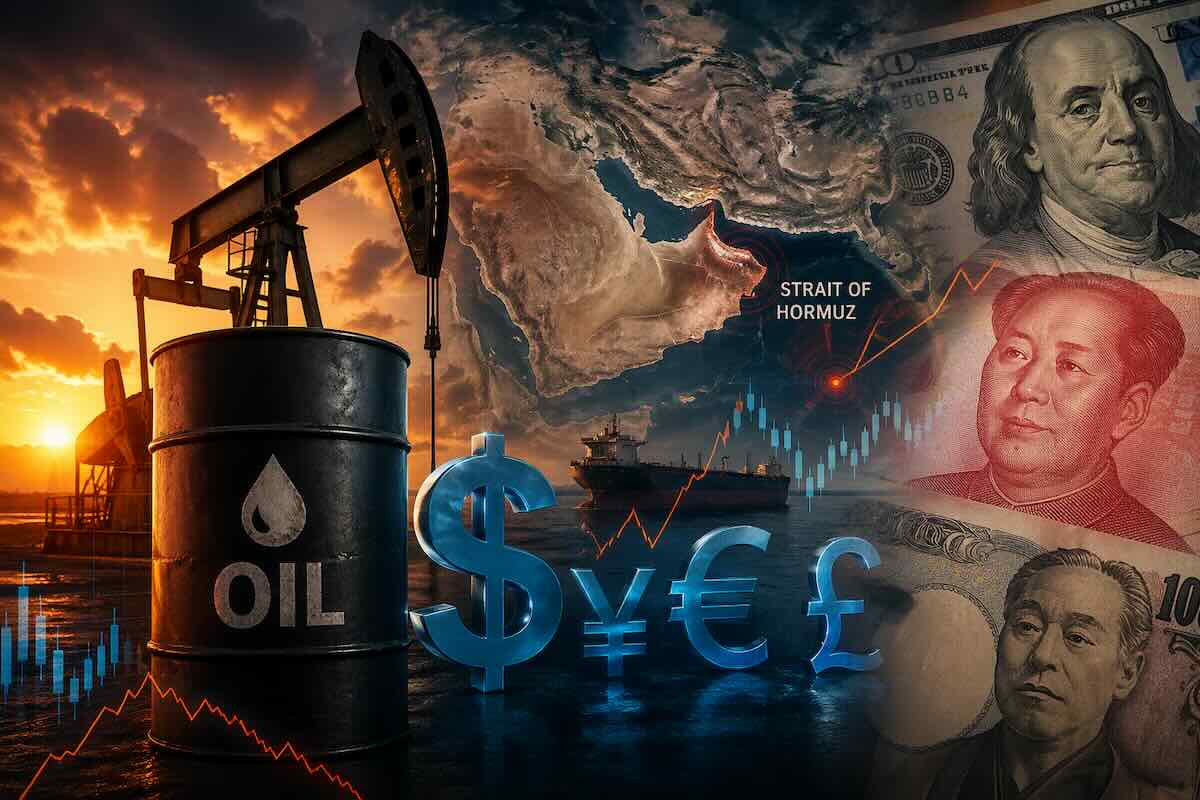
Oil Shock and Middle East Risk: Why Safe-Haven Currencies Are Back in Focus
Middle East tensions have moved back to the centre of currency markets, with oil prices elevated and investors again favouring safer assets.
Reuters reported that emerging market stocks and currencies fell as restrictions on shipping through the Strait of Hormuz and stalled U.S.–Iran negotiations kept crude oil above US$100 a barrel, raising fears of a global slowdown. Investors responded by moving back into the safe-haven US dollar. Reuters
Why oil matters for exchange rates
Oil shocks affect currencies in several ways.
First, higher energy prices can push inflation higher. That can force central banks to keep interest rates higher for longer, even if growth is weakening.
Second, countries that import most of their energy can see their trade balances deteriorate. That is particularly important for parts of Asia, where Reuters noted that the region imports around 60% of its crude oil from the Middle East.
Third, when geopolitical risk rises, investors often move away from risk-sensitive currencies and into safe havens such as the US dollar, Swiss franc and, depending on the situation, the Japanese yen.
US dollar: safe-haven demand returns
The US dollar has regained support as investors look for safety. Reuters reported that the dollar was on track for a weekly gain as Middle East tensions escalated and hopes for a peace deal faded.
For BER users, this matters because a stronger US dollar can make USD transfers more expensive for Australians, New Zealanders, Britons and Europeans sending money to the United States.
Popular affected pairs include:
Australian dollar: exposed to risk sentiment
The Australian dollar is not directly an oil currency in the same way as the Canadian dollar, but it is sensitive to global growth expectations, commodity demand and risk appetite.
When investors worry about a global slowdown, the AUD can come under pressure. That means Australians sending money overseas may see weaker buying power if markets stay cautious.
The key risk for AUD/USD is that higher oil prices could hurt global growth while the US dollar benefits from safe-haven demand.
Japanese yen: complicated by oil and intervention risk
The yen is usually thought of as a safe-haven currency, but Japan is also a major energy importer. That means higher oil prices can be negative for Japan’s trade balance.
This creates a mixed picture for AUD/JPY and USD/JPY. The yen may benefit when investors reduce risk, but it can also weaken if higher energy import costs dominate.
Reuters has also reported renewed attention on possible Japanese FX intervention as the yen trades near sensitive levels. That makes JPY pairs especially vulnerable to sharp moves.
What it means for travellers, expats and businesses
For travellers, the main issue is volatility. Exchange rates can move quickly when oil headlines change.
For expats and regular transfer users, it may be worth splitting larger transfers into smaller amounts rather than trying to pick the perfect day.
For businesses, higher oil prices can affect both input costs and exchange rates. Importers paying in USD may face a double hit: higher commodity prices and a stronger US dollar.
What could change the outlook?
The biggest swing factor is the Strait of Hormuz. Reuters reported that oil fell sharply and the dollar weakened when markets became more hopeful that the strait would remain open and the conflict would ease.
If tensions ease, risk appetite could improve and the US dollar may give back some of its safe-haven gains.
If tensions worsen, oil could remain elevated, risk-sensitive currencies may weaken further, and safe-haven demand could stay strong.
BER take
Currency markets are being driven less by normal economic data and more by geopolitical risk. That makes comparing rates more important, not less.
When markets are volatile, bank margins and provider spreads can make a large difference to the final amount received. Before making a large transfer, compare the live market rate with the rate offered by your bank or money transfer provider.
Disclaimer: Please note any provider recommendations, currency forecasts or any opinions of our authors should not be taken as a reference to buy or sell any financial product.