New 50% U.S. Tariffs Put Canadian Dollar Under Pressure
The Canadian dollar fell to a one-week low after the United States announced additional tariffs on selected Canadian goods.
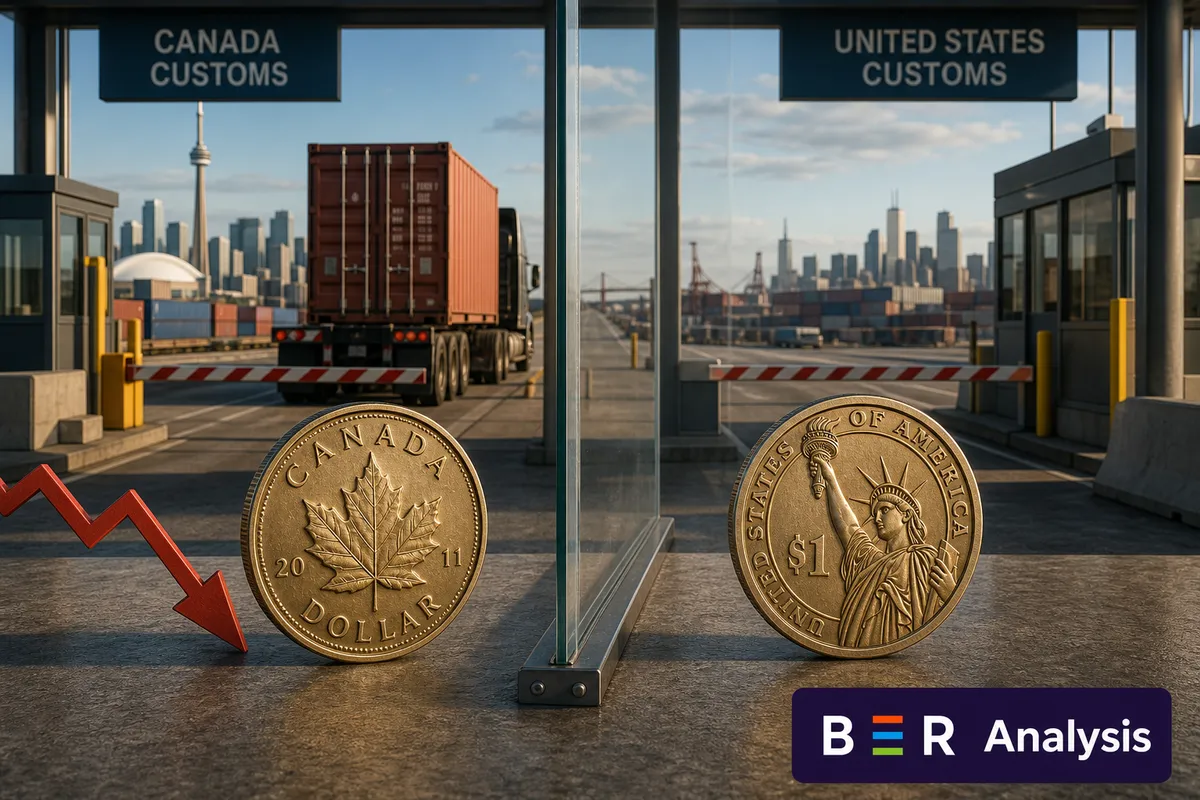
The Canadian dollar weakened after the United States announced additional 50% tariffs on selected Canadian goods, adding a new risk for Canadians buying U.S. dollars and businesses managing cross-border invoices.
The measures were announced on 20 July 2026 and are scheduled to take effect on 19 August. Reuters reported that the loonie fell 0.2% on 21 July to C$1.4104 per U.S. dollar, or about 70.90 U.S. cents per Canadian dollar, its weakest level in a week.
That market move does not mean the tariff announcement will determine CAD's longer-term direction. Negotiations are continuing, and the currency is also responding to Canadian and U.S. interest-rate expectations, oil prices and the wider U.S. dollar trend.
What the New Tariffs Cover
The White House signed three proclamations under Section 338 of the Tariff Act of 1930. The measures impose an additional 50% duty on selected Canadian products linked to U.S. complaints about Canadian treatment of motor vehicles, alcoholic beverages and dairy products.
The White House listed products such as wine, cement and hockey sticks among the affected goods. It said covered products can face the additional duty even when they qualify as originating goods under the United States–Mexico–Canada Agreement.
This is not a 50% tariff on every Canadian export. The White House said the measures exclude energy, potash, products already subject to Section 232 tariffs, and some other goods including fish and critical minerals. The U.S. Trade Representative said the affected imports were worth nearly US$20 billion.
The proclamations specify an effective time of 12:01 a.m. U.S. Eastern time on 19 August 2026. The delayed start leaves a window in which the scope or timing could change.
Why the Canadian Dollar Weakened
Reuters linked the immediate CAD decline to both the tariff threat and a shift in expectations for Bank of Canada policy. Investors reduced the amount of Canadian rate tightening priced for the end of 2026, while the gap between Canadian and U.S. two-year government bond yields widened.
That matters because relatively lower Canadian yields can make CAD-denominated assets less attractive than comparable U.S. assets. If tariffs are expected to weaken Canadian growth, markets may also see less room for the Bank of Canada to raise rates.
The relationship is not automatic. A tariff can also affect inflation, supply chains and U.S. growth, while movements in oil and the broad U.S. dollar can offset or amplify the response in USD/CAD.
What CAD and USD Users Should Check
The market convention can be confusing when the pair moves quickly. USD/CAD shows how many Canadian dollars buy one U.S. dollar. A rise in USD/CAD means Canadians need more Canadian dollars to buy the same amount of U.S. currency. CAD/USD shows the inverse: how many U.S. dollars one Canadian dollar buys.
Canadians paying U.S. tuition, property expenses, supplier invoices or travel costs can follow the live CAD to USD rate. Anyone converting U.S. dollars into Canadian dollars can instead check USD to CAD.
The rate reported in market news is usually not the retail rate offered by a bank or transfer provider. Before converting, compare the exchange-rate margin, transfer fee and final amount received. For a large invoice or scheduled payment, also confirm which currency the contract requires and when the amount becomes due.
Trying to predict one perfect conversion point can add risk. People with flexibility may prefer to compare quotes at the same time, set a budget rate or divide a large transfer into stages, depending on their needs and the tools available from their provider.
Negotiations Could Change the Outcome
Prime Minister Mark Carney said Canada had made proposals to resolve the disputes and was ready to intensify negotiations. He also said Canada would take the measures it considered necessary to support Canadian workers, farmers and businesses.
That makes the next four weeks important. A negotiated change could ease part of the trade risk, while a broader dispute or Canadian countermeasures could increase uncertainty for exporters and importers on both sides of the border.
Currency users should distinguish between the announcement and implementation. The measures have been formally proclaimed, but they do not begin until 19 August and can still be amended, delayed or withdrawn before then.
For the broader mix of interest rates, growth, oil and trade risks, see the Canadian dollar outlook.
What to Watch Next
- Any agreement or product-list change before the planned 19 August start.
- Canada's response and whether it includes new countermeasures.
- Changes in Bank of Canada expectations and the Canadian–U.S. yield gap.
- Whether CAD weakness extends beyond the initial one-week low or reverses as negotiations develop.
Methodology and Sources
This story was researched on 22 July 2026. Tariff scope and timing were checked against U.S. government documents, Canada's position was checked against the Prime Minister's statement, and the immediate currency reaction was attributed to Reuters. Tariff plans, exchange rates and rate expectations can change after publication.
- White House fact sheet on the additional tariffs
- U.S. Trade Representative statement on the Section 338 action
- Prime Minister of Canada statement on the tariff announcement
- Reuters report on the Canadian dollar and rate expectations
This article is general information, not personal financial advice.
Disclaimer: Please note any provider recommendations, currency forecasts or any opinions of our authors should not be taken as a reference to buy or sell any financial product.