Latest market analysis
HKD Market Update
12 Aug 2026 • 00:29 GMT
The Hong Kong dollar (HKD) is currently trading near 90-day lows against the US dollar, around 0.1274. Despite this dip, the pair remains within a narrow, stable range from 0.1274 to 0.1277, reflecting market expectations that the HKD will continue to follow the US dollar's lead due to the currency's peg system.
The US dollar has gained strength recently, supported by expectations of further Federal Reserve tightening amid strong US economic data, including a solid jobs report. This US dollar momentum puts downward pressure on HKD/USD, but the Hong Kong dollar’s stability is reinforced by the monetary policy alignment with the Fed and market confidence in Hong Kong's economic reform plan.
While the USD remains resilient, the HKD’s close-to-range lows suggest traders are cautiously watching for any shifts in US monetary policy or geopolitical developments that could influence currency flows. Overall, the HKD is expected to remain steady within its peg, with any significant move likely to depend on US dollar trends and global risk sentiment.
Stay informed
HKD news & insights
Recent analysis, guides and market developments relevant to the Hong Kong dollar.

Rate direction
US dollar to Hong Kong dollar · USD/HKD trend
Review the recent market direction, current mid-market rate and significant movement alerts.
Compare before you exchange
Compare and save on HKD exchange rates
Exchange rates vary between banks and currency providers. Use the comparison below to understand total costs and potential savings against typical bank pricing.
Loading exchange rates...
|
|
|
||
|
|
|
||
|
|
|
||
|
|
|
Explore HKD pairs
Popular HKD exchange rates
Open a currency pair to view its live rate, comparison options, recent trend and market context.


1 HKD =0.1274USD
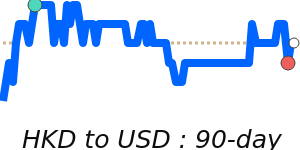
1D−0.1%▼
90dLows

1 HKD =0.1103EUR
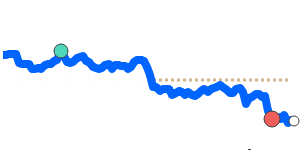
1D0.0%⬦

1 HKD =0.1773CAD
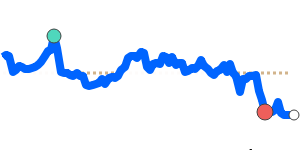
1D−0.2%▼

1 HKD =0.094214GBP
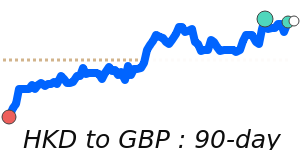
1D0.0%⬦

1 HKD =12.15INR
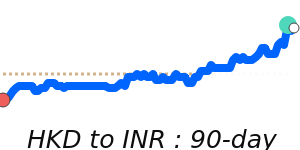
1D0.0%⬦

1 HKD =20.26JPY
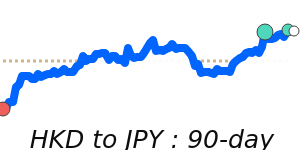
1D0.0%⬦

1 HKD =0.1799AUD
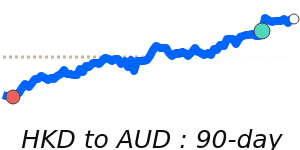
1D−0.2%▼

1 HKD =0.1629SGD
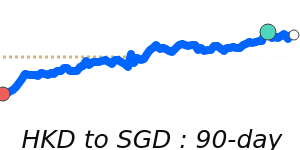
1D−0.1%▼

1 HKD =0.8593CNY
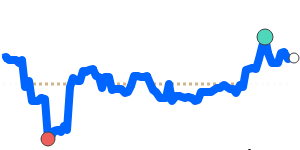
1D0.0%⬦
90dLows