Recent News
Browse popular currencies and topics, or open the full lists.
View all 40 currencies
View all 40 topics
RBA Holds at 4.35% as AUD Rate Outlook Stays Uncertain
The RBA held at 4.35% as inflation stayed too high, leaving AUD transfer customers with an uncertain rate outlook and a need to compare live quotes.

U.S. and Japan Confirm Joint Yen Intervention
The United States and Japan confirmed coordinated yen intervention, replacing earlier uncertainty while official transaction totals remain pending.

Japan Ski Season 2026–27: Lift Pass Prices and Yen Planning
Japan's 2026–27 ski prices are arriving while the yen remains volatile. Compare Niseko and Hakuba passes, exchange rates, payment costs, and booking currency before committing.

Biggest Currency Movers – July 2026
The New Zealand dollar led July’s G10 gains after an RBNZ rate hike, while softer U.S. inflation weighed on the dollar and left the euro at the bottom of the major-currency table.

Global Central Banks Shift Policy: Key FX Impacts for August 2025
Central banks are moving in different directions—Australia cuts, UK eases despite inflation, and the Fed faces political risks. Here’s what it means for exchange rates and transfer timing.
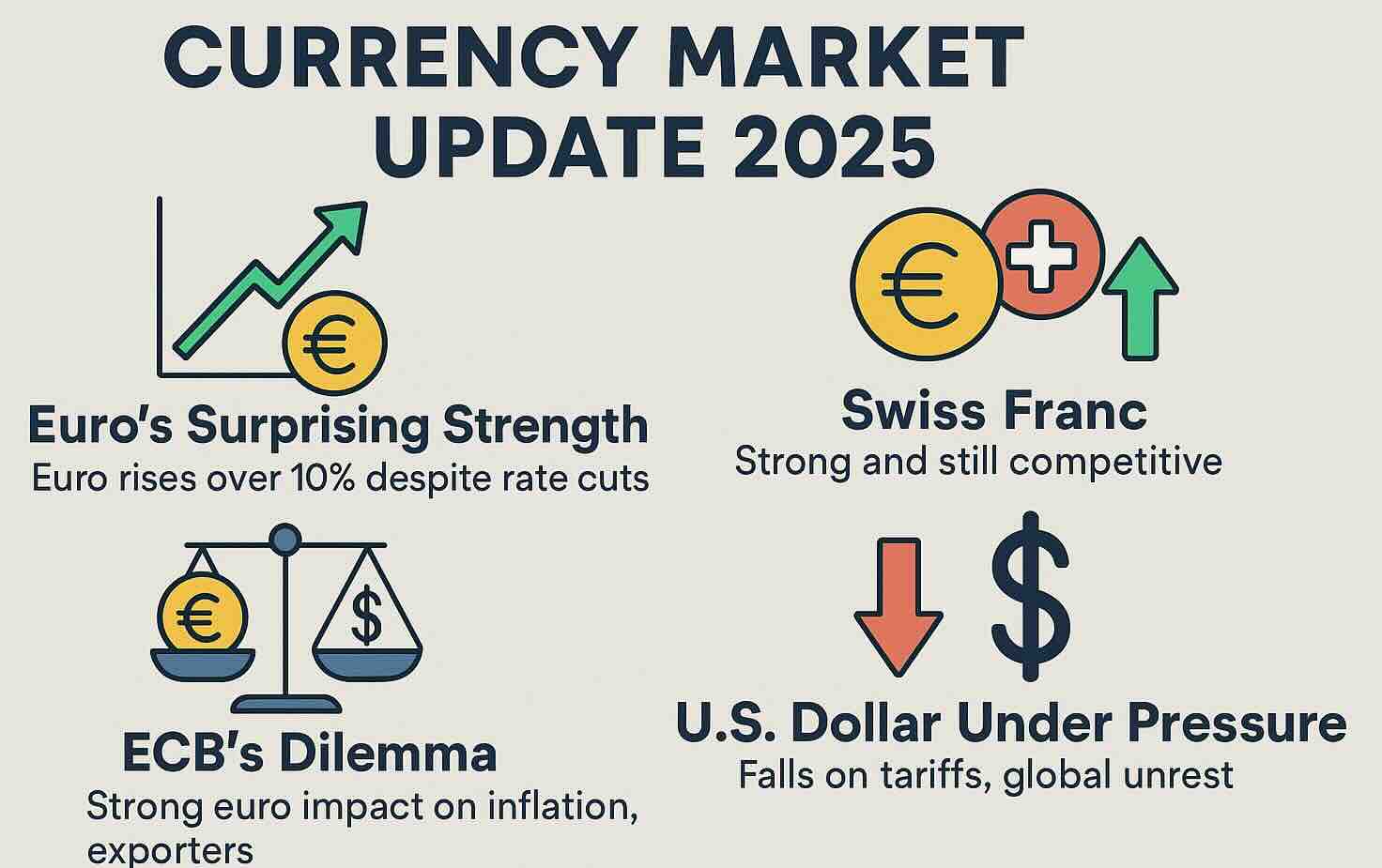
Global Currency Shake-Up: Euro Surges, Dollar Stumbles, Franc Holds Strong
The euro's unexpected rise against the U.S. dollar presents the European Central Bank with a complex dilemma, as global trade tensions and policy shifts influence currency dynamics.

Volatile May for Foreign Exchange Rates: EUR, GBP, JPY, AUD, NZD, RON
In May 2025, currency markets experienced notable fluctuations influenced by geopolitical developments, economic policies, and trade relations. The pound (GBP) and euro (EUR) were strong while U.S. dollar (USD) exhibited a weakening trend, while several other currencies demonstrated strength.

US-China Trade Truce Boosts Dollar, Euro and Yen React
The US dollar surged following a 90-day tariff pause between the US and China, while the euro and yen weakened in response.
The U.S. Dollar Is Losing Ground to the Euro — And the World Is Watching
Deutsche Bank forecasts a significant weakening of the US dollar in the coming years, potentially reaching its lowest level against the euro in over a decade.

Swiss Franc Surges Amid U.S. Tariff Escalation
The Swiss franc has experienced a significant surge, reaching a decade-high against the U.S. dollar, following President Donald Trump's announcement of increased tariffs on Chinese imports. This development has intensified market volatility and heightened demand for safe-haven assets.

Yuan's Volatility Surges Amid U.S. Tariff Escalation
The Chinese yuan has weakened following the United States' decision to impose a 125% tariff on Chinese imports, prompting the People's Bank of China to intervene to stabilize the currency.
Global Currency Markets React to U.S. Tariffs and Economic Policies
Recent U.S. trade policies, including aggressive tariffs on auto imports, have introduced significant volatility in global currency markets, affecting major currencies such as the euro, British pound, and Japanese yen.
Currency Markets in Flux: Euro's Ascent Amidst Global Economic Shifts
The global currency landscape is experiencing notable shifts as the euro strengthens against major currencies, influenced by economic policies, geopolitical events, and fluctuating oil prices.
US Dollar Hits 14-Month Low on Cooling US Inflation
USD sinks as global currency markets react to slowing US inflation, prompting a surge in other major currencies and a potential end to the Federal Reserve's tightening cycle.

Fears of US Recession Shifts Currencies & Commodities
As we approach mid-year a shift has taken place in currency markets with the narrative less about interest rates hikes and more risk-off worries about a possible coming recession.
Japan Allows Fintech Payments Specialists to Compete with Banks
The Japanese FSA has announced it will finally remove a ¥1 million (US$9,000) cap on cross-border money transfers handled by non-banking entities, paving the way for a major overhaul of Japan’s remittance industry.