Recent News >
By Currency: (EUR) USD(35) EUR(23) AUD(22) JPY(16) CAD(15) GBP(14) CHF(12) NZD(8) INR(8) OIL(8) CNY(8) SGD(5) MXN(5) KRW(3) SEK(3) IDR(3) VND(3) THB(3) RUB(3) TRY(2) TWD(2) NGN(2) NOK(1) PLN(1) NPR(1) ZAR(1) LAK(1) MMK(1) SYP(1) PHP(1) PKR(1) RON(1) ARS(1) KES(1) GHS(1) UGX(1) HKD(1) FJD(1)
By Topic: About Us(7) Fx Specialists(6) Wise(6) Foreign Transfers(5) Revolut(5) Travel Money(4) Fx Analysis(3) Expat(3) Ofx(3) Central Banks(1) South Korea(1) Fx Risk(1) Large Amounts(1) Business(1) Foreign Currency Accounts(1) Africa(1) Travel Cards(1) Provider Comparison(1) Crypto(1) Study Abroad(1)

Biggest Currency Movers – July 2026
The New Zealand dollar led July’s G10 gains after an RBNZ rate hike, while softer U.S. inflation weighed on the dollar and left the euro at the bottom of the major-currency table.
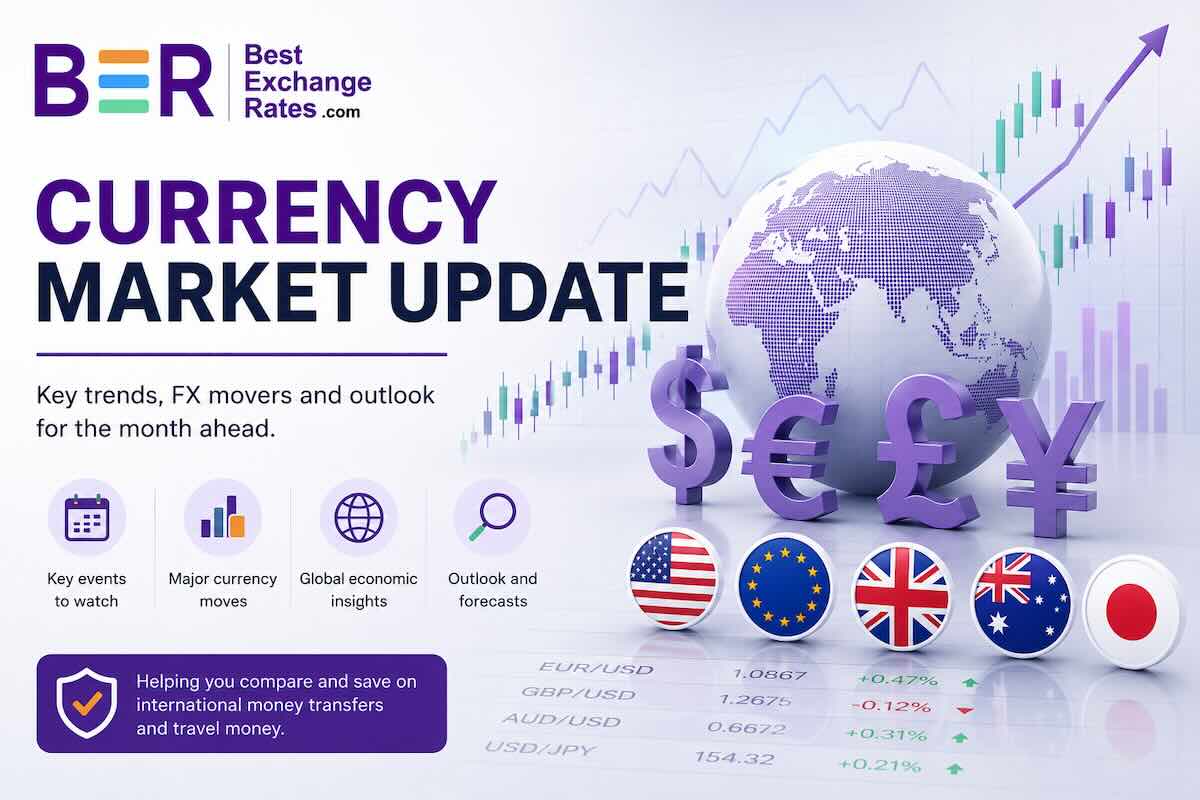
Central Banks Diverge as July FX Decisions Approach
Central-bank policy is moving in different directions in July 2026. New Zealand and Japan have raised rates, Canada is holding, and the next Fed, Bank of England and Bank of Japan meetings could drive fresh currency volatility.

Oil Shock: Why Safe-Haven Currencies Are Back in Focus
Higher oil prices and Middle East uncertainty have pushed investors back toward safe-haven currencies, especially the US dollar, while adding pressure to oil-importing and risk-sensitive currencies as the Australian dollar.

Iran conflict lifts U.S. dollar as rupee and won come under pressure
The U.S. dollar has strengthened as investors move into safer assets, while higher oil prices and rising economic risks weigh on Asian currencies such as the Indian rupee and South Korean won.

Japan Travel Boom: Weak Yen Makes Winter Trips Exceptional Value
With the yen down sharply against major currencies, winter in Japan offers rare value on hotels, food, transport, and skiing. A rare currency tailwind for travellers.

Global Central Banks Shift Policy: Key FX Impacts for August 2025
Central banks are moving in different directions—Australia cuts, UK eases despite inflation, and the Fed faces political risks. Here’s what it means for exchange rates and transfer timing.
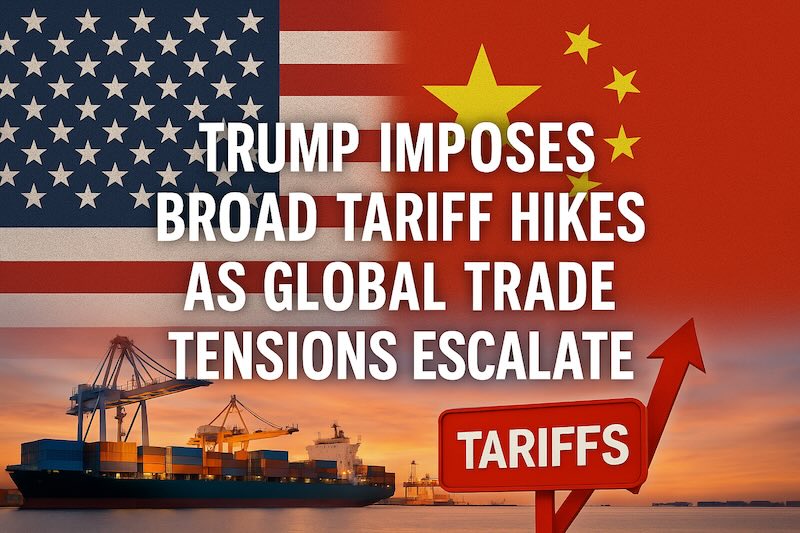
Trump Imposes Broad Tariff Hikes as Global Trade Tensions Escalate
President Trump has raised U.S. tariffs to an average of 15.2%, targeting Canada, Asia, and Europe, as part of his push to reshape global trade. Markets and currencies reacted with caution amid rising uncertainty.
Swedish Krona's Strength Challenges Euro Adoption Support
The Swedish Krona's recent appreciation has led to a decline in public support for adopting the Euro, with only 32% favoring the change in 2025.
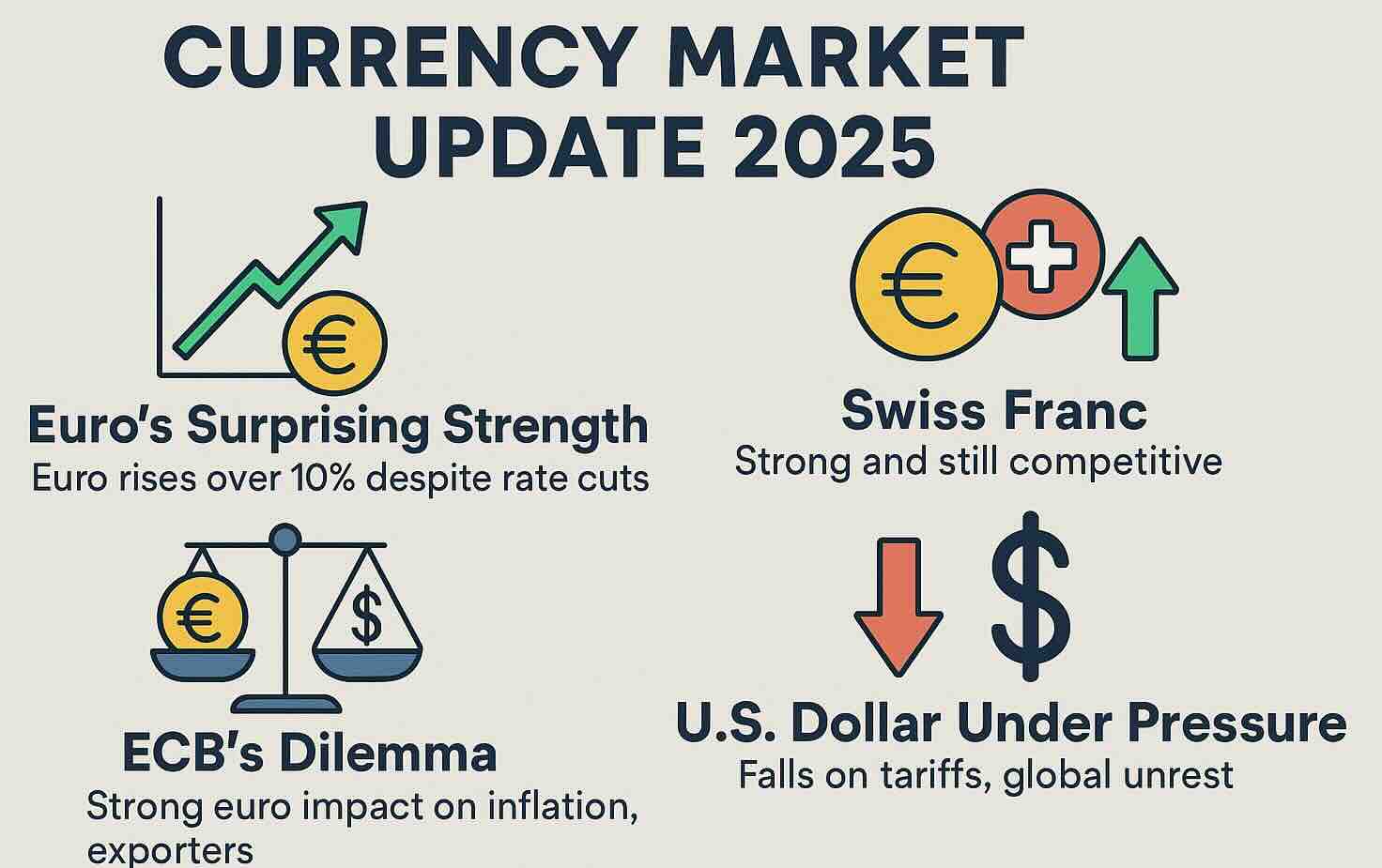
Global Currency Shake-Up: Euro Surges, Dollar Stumbles, Franc Holds Strong
The euro's unexpected rise against the U.S. dollar presents the European Central Bank with a complex dilemma, as global trade tensions and policy shifts influence currency dynamics.

Volatile May for Foreign Exchange Rates: EUR, GBP, JPY, AUD, NZD, RON
In May 2025, currency markets experienced notable fluctuations influenced by geopolitical developments, economic policies, and trade relations. The pound (GBP) and euro (EUR) were strong while U.S. dollar (USD) exhibited a weakening trend, while several other currencies demonstrated strength.

US-China Trade Truce Boosts Dollar, Euro and Yen React
The US dollar surged following a 90-day tariff pause between the US and China, while the euro and yen weakened in response.
The U.S. Dollar Is Losing Ground to the Euro — And the World Is Watching
Deutsche Bank forecasts a significant weakening of the US dollar in the coming years, potentially reaching its lowest level against the euro in over a decade.
US Dollar Hits Three-Year Low On Jerome Powell Dismissal Threat
The US dollar has fallen to a three-year low, influenced by Trump policy back flips plus concerns over the Federal Reserve's independence. Analysts suggest a long-overdue correction due to overvaluation and trade tensions.
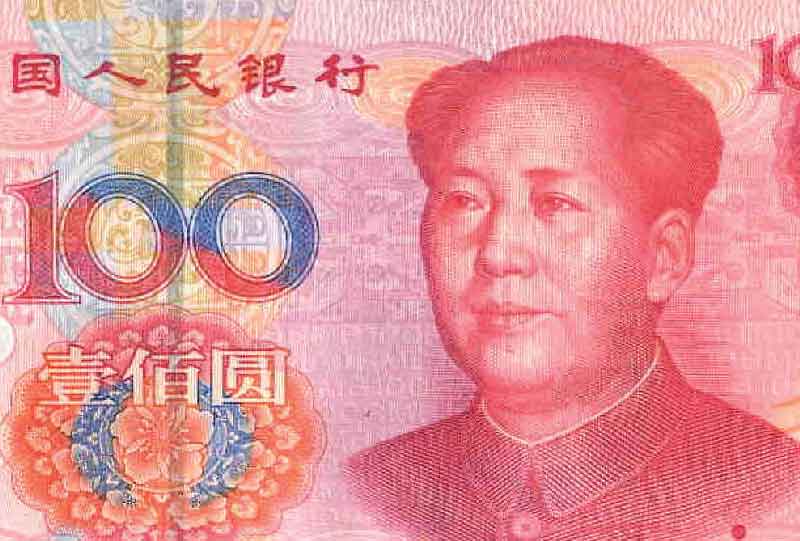
Yuan's Volatility Surges Amid U.S. Tariff Escalation
The Chinese yuan has weakened following the United States' decision to impose a 125% tariff on Chinese imports, prompting the People's Bank of China to intervene to stabilize the currency.
Global Currency Markets React to U.S. Tariffs and Economic Policies
Recent U.S. trade policies, including aggressive tariffs on auto imports, have introduced significant volatility in global currency markets, affecting major currencies such as the euro, British pound, and Japanese yen.
Currency Markets in Flux: Euro's Ascent Amidst Global Economic Shifts
The global currency landscape is experiencing notable shifts as the euro strengthens against major currencies, influenced by economic policies, geopolitical events, and fluctuating oil prices.
Great News for Travelers to Europe this Summer
Stronger AUD, USD, and GBP Against the Euro due to surprise French elections.
US Dollar Hits 14-Month Low on Cooling US Inflation
USD sinks as global currency markets react to slowing US inflation, prompting a surge in other major currencies and a potential end to the Federal Reserve's tightening cycle.